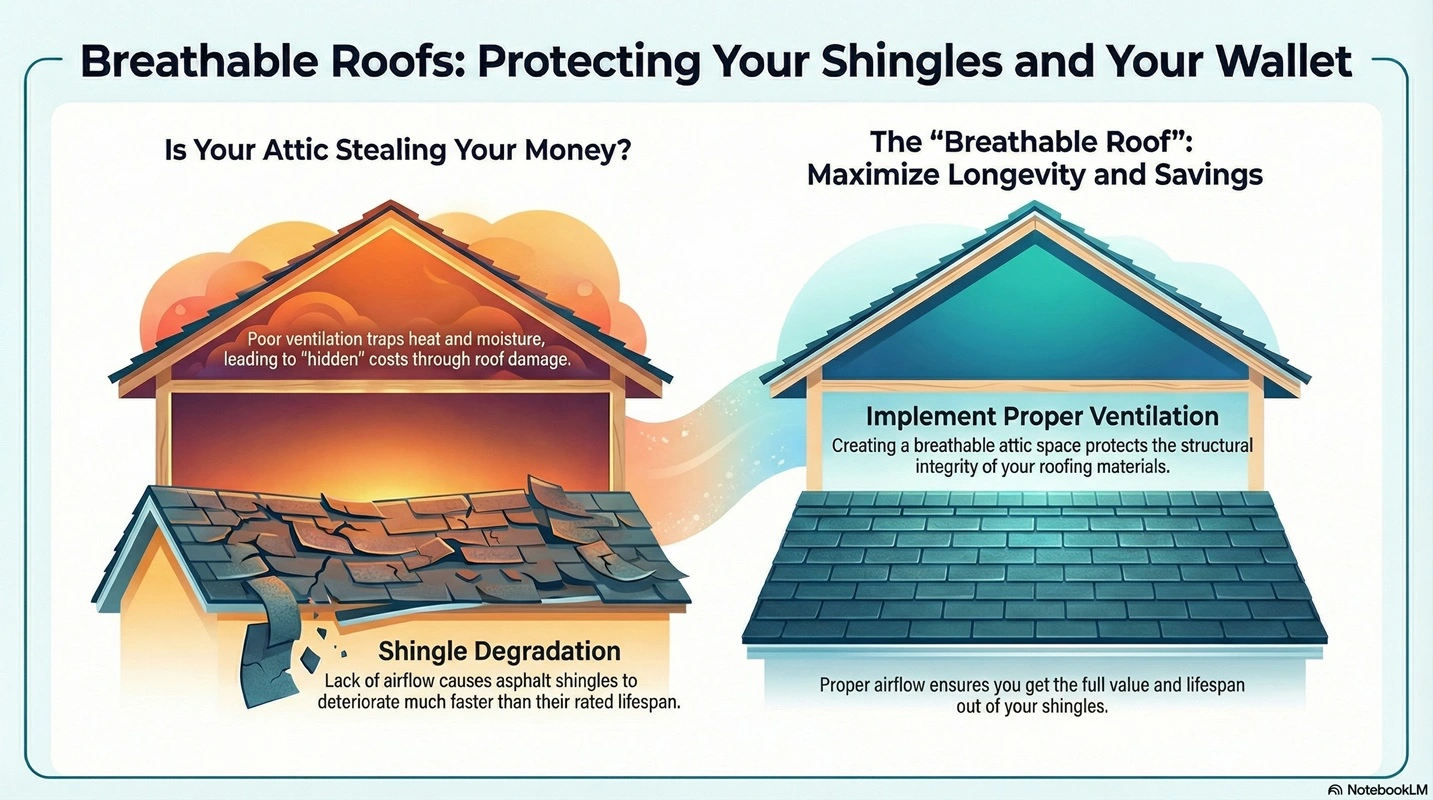
Picture this: You’re staring at a roofing bill that hits like a gut punch—thousands of dollars to replace your asphalt shingles years ahead of schedule. You wonder, “What went wrong?” Often, the culprit hides in plain sight: your attic. Poor ventilation traps heat and moisture, turning your roof into a pressure cooker that accelerates shingle damage. Asphalt shingles, the most popular roofing material in North America, rely on breathable attics to last their full 20-30 years. Without it, you’re flushing money down the drain on premature repairs.
In this post, we’ll uncover how attic ventilation works, why it safeguards your shingles (and your wallet), and simple steps to check and fix yours. By the end, you’ll know exactly how to stop your attic from becoming a money pit.
The Hidden Attic Problem: Heat, Moisture, and Shingle Sabotage
Your attic isn’t just dead space—it’s the unsung hero (or villain) of your roof’s lifespan. Asphalt shingles endure brutal conditions: UV rays, wind, rain, and temperature swings. But the real killer? Extreme attic heat and trapped moisture.
In summer, a poorly ventilated attic can hit 150°F (65°C) or more, even if outside temps are a mild 90°F (32°C). This superheats shingles from below, causing them to lose tiny oil-like granules that protect against UV damage. Granules gone means faster cracking, curling, and brittleness—like frying an egg on a scorching sidewalk.
Winter brings moisture mayhem. Warm household air rises, hits the cold roof deck, and condenses into ice dams or damp rot. This softens shingles, leading to leaks and mold. Studies from the National Roofing Contractors Association (NRCA) show that inadequate ventilation shortens shingle life by 30-50%. Translation: A $10,000 roof replacement arrives five to ten years early, costing you big.
Example: Homeowner Sarah in Nashville ignored attic vents during a remodel. Two summers later, her 10-year-old shingles buckled under 160°F attic temps. Replacement? $12,000. Proper vents could’ve saved her.
Why Asphalt Shingles Need Airflow to Thrive
Asphalt shingles are flexible fighters, composed of fiberglass mats coated in asphalt and topped with mineral granules. They flex with weather but degrade when overheated or wet.
Proper ventilation creates a continuous airflow path: intake vents low (soffits), exhaust high (ridge or gable). Cool air enters, hot/moist air exits, keeping attic temps within 10-20°F of outside. This “chimney effect” slashes peak heat by 50%, per U.S. Department of Energy data.
Benefits stack up:
Extended Lifespan: Vented attics add 10+ years to shingles.
Energy Savings: Cooler attics mean less AC strain—up to 30% lower bills.
Fewer Repairs: No ice dams or granule loss reduces leak risks.
Without it, thermal shock warps shingles. Imagine a credit card left in a hot car: it curls. Same principle.
Diagnosing Your Attic: Signs It’s Stealing Your Cash
Don’t wait for shingles to fail. Spot these red flags:
Shingle Clues: Granules in gutters (like black sand), curling edges, or bald spots.
Attic Indicators: Temps over 130°F (use an infrared thermometer), musty smells, frost on rafters, or dark streaks on underlayment.
Energy Bills: Spiking summer cooling costs signal heat buildup.
Ice Dams: Icicles or roof leaks in winter scream poor airflow.
Quick test: On a hot day, climb in (safely) with a thermometer. If it’s 40°F+ hotter than outside, ventilation fails. Tools like a hygrometer reveal high humidity (>60%).
Ventilation Basics: Get the Right Balance
Experts recommend 1 square foot of vent area per 150 square feet of attic floor space (1:150 ratio), or 1:300 if balanced intake/exhaust. Aim for half low, half high.
Key Vent Types:
| Vent Type | Location | Pros | Best For |
| Soffit Vents | Under eaves | Continuous intake | Most homes |
| Ridge Vents | Roof peak | Strong exhaust | Pitched roofs |
| Gable Vents | Side walls | Affordable | Gable roofs |
| Turbine/Box Vents | Roof surface | Powered boost | Low-pitch roofs |
| Solar-Powered | Roof-mounted | Free energy | Eco-conscious |
Pro tip: Baffles (plastic channels) prevent soffit blockages from insulation. Skip cheap plastic combs—opt for durable metal ridge vents.
DIY Checks and Easy Fixes
Start simple—no contractor needed yet.
Inspect Vents: Clear debris from soffits and ridges. Ensure screens block pests.
Add Baffles: Install foam ones between rafters ($1 each) before insulation.
Test Airflow: Smoke test—puff a cigarette near soffits; it should pull toward ridge.
Upgrade Insulation: R-49 minimum in attics fights air leaks.
Cost? Under $200 for most homes. Example: A Midwest family added ridge venting for $150, dropping attic temps 40°F and saving $300/year on energy.
When to Call Pros: Big Upgrades That Pay Off
Severe issues? Hire certified roofers. Full re-venting (new ridge + soffits) runs $1,000-$3,000 but ROI hits in 3-5 years via savings and longevity.
Bonus: Pair with radiant barriers (foil under rafters) to reflect 97% of heat. Oak Ridge National Lab tests show 20-30% cooler attics.
Protect Your Investment: Maintenance Calendar
Spring: Clean gutters/vents.
Summer: Check temps, trim overhanging trees.
Fall: Add baffles if needed.
Winter: Monitor for ice dams.
Annual pro inspection? $200 well spent.
Wrapping Up: Ventilate Now, Save Later
Your attic doesn’t have to steal your money. Proper ventilation is cheap insurance against shingle failure, turning a ticking time bomb into a reliable shield. Asphalt roofs thrive with airflow—ignore it, and pay dearly.
Take action today: Assess your attic, tweak vents, and watch your roof (and bank account) thank you. A few hours now prevent years of regret.
Read more:
Asphalt Shingle Roof Replacement Franklin | Commercial Roofing Contractor in Middle Tennessee