Tag: TCS Roofing Company

  • Choosing a Contractor: 7 Red Flags to Watch Out for When Hiring a Roofer in TN

    Choosing a Contractor: 7 Red Flags to Watch Out for When Hiring a Roofer in TN

    Hiring a reliable roofer in Tennessee is crucial for protecting your home from the state’s humid summers, severe storms, and occasional tornadoes. Spotting red flags early can save you from costly repairs, legal headaches, and shoddy work.

    Tennessee’s diverse climate—from Nashville’s hot, humid summers to East Tennessee’s heavy rains—puts roofs under constant stress, making quality roofing essential. Poor choices can lead to leaks, structural damage, or even safety hazards. This guide outlines seven key red flags when hiring a roofing contractor in TN, drawing from common industry pitfalls. By avoiding these, you’ll safeguard your investment and ensure lasting protection.

    Red Flag 1: No License or Insurance

    In Tennessee, roofers must hold a contractor’s license from the Tennessee Board for Licensing Contractors if their projects exceed $25,000 in value or $3,000 in labor costs. Demand proof of a valid license and certificates for general liability insurance plus workers’ compensation. Unlicensed or uninsured roofers leave you liable for worker injuries, property damage, or code violations—potentially costing tens of thousands in fines or lawsuits. Always verify via the TN Department of Commerce & Insurance website.

    Red Flag 2: Storm-Chasing Out-of-Towners

    After storms like those from Hurricane Helene remnants, “storm chasers” flood TN from out of state, promising quick fixes with flashy trucks. They often use fake local addresses, lack proper insurance, and vanish post-job, voiding warranties. Local TN roofers invest in the community, offer follow-up service, and understand state-specific codes like wind uplift requirements in Middle Tennessee. Check for a physical TN business address and reviews from local jobs.

    Red Flag 3: Unrealistically Low Bids

    A bid far below competitors often signals cheap materials, skipped steps like underlayment or ventilation, or unlicensed subcontractors. In TN, quality asphalt shingles meeting ASTM standards cost a premium, and low bids ignore disposal fees or permits required in counties like Shelby or Knox. Compare line-item breakdowns: legitimate quotes detail materials (e.g., GAF Timberline HDZ), labor, and timeline. Hidden corners cut lead to premature leaks in TN’s freeze-thaw cycles.

    Red Flag 4: High-Pressure Sales Tactics

    Beware roofers demanding immediate signatures with “today-only deals” or scare tactics about “imminent collapse.” Ethical TN contractors give you time to review, consult references, and get multiple bids. Pressure ignores your right to a cooling-off period under TN consumer laws. They may push unnecessary full replacements over repairs, inflating costs without addressing root issues like poor attic ventilation common in Chattanooga homes.

    Red Flag 5: Vague or Verbal Contracts

    Insist on a detailed written contract specifying scope (e.g., tear-off depth, flashing around vents), materials brands, payment milestones (never full upfront), warranties, and cleanup. Verbal deals or one-page “estimates” invite disputes. TN law requires contracts for jobs over $25 to protect against “bait-and-switch” where low initial quotes balloon with “surprise” fees. Review for liens waivers to prevent subcontractor claims on your property.

    Red Flag 6: Poor References or Online Presence

    Legitimate roofers provide 3-5 recent TN references and have established websites, Google reviews, and BBB profiles. Dig for photos of completed jobs in your area, like Memphis brick homes or Knoxville asphalt roofs. Fake reviews or no digital footprint signal fly-by-nights. Check Angi or HomeAdvisor for TN-specific ratings—avoid those with patterns of unresolved complaints about leaks or delays.

    Red Flag 7: Subpar Workmanship Indicators

    During inspections, watch for crooked shingles, exposed nails, inadequate flashing, or skipped ice-and-water shields required for TN’s winter ice dams. Post-job, verify permits pulled (mandatory in urban areas like Franklin) and no debris left behind. Shoddy crews hire unskilled labor, ignoring IRC codes for roof pitches over 3:12. Request a final walkthrough and manufacturer certifications for warranties like Owens Corning’s 50-year system.

    Tennessee-Specific Tips

    TN’s building codes emphasize hurricane-rated products in West TN and metal reinforcements in the Smokies. Use the TN Secretary of State’s business search for legitimacy. Post-job, file insurance claims only with licensed pros to avoid denials. Budget $8,000-$20,000 for a 2,000 sq ft asphalt roof replacement, factoring local labor rates around $100/hour.

    Read more:

    Commercial Roofing Contractor in Middle Tennessee | Top 5 Myths About Roof Replacements

    Summary

    Steer clear of unlicensed operators, lowballers, chasers, pressure sales, vague contracts, weak references, and sloppy signs to hire a trustworthy TN roofer. Verify credentials, get written details, and prioritize locals for peace of mind. Your roof’s longevity depends on it—invest wisely to weather TN’s elements.

  • How Long Should an Asphalt Shingles Roof Last in Nashville’s Humidity?

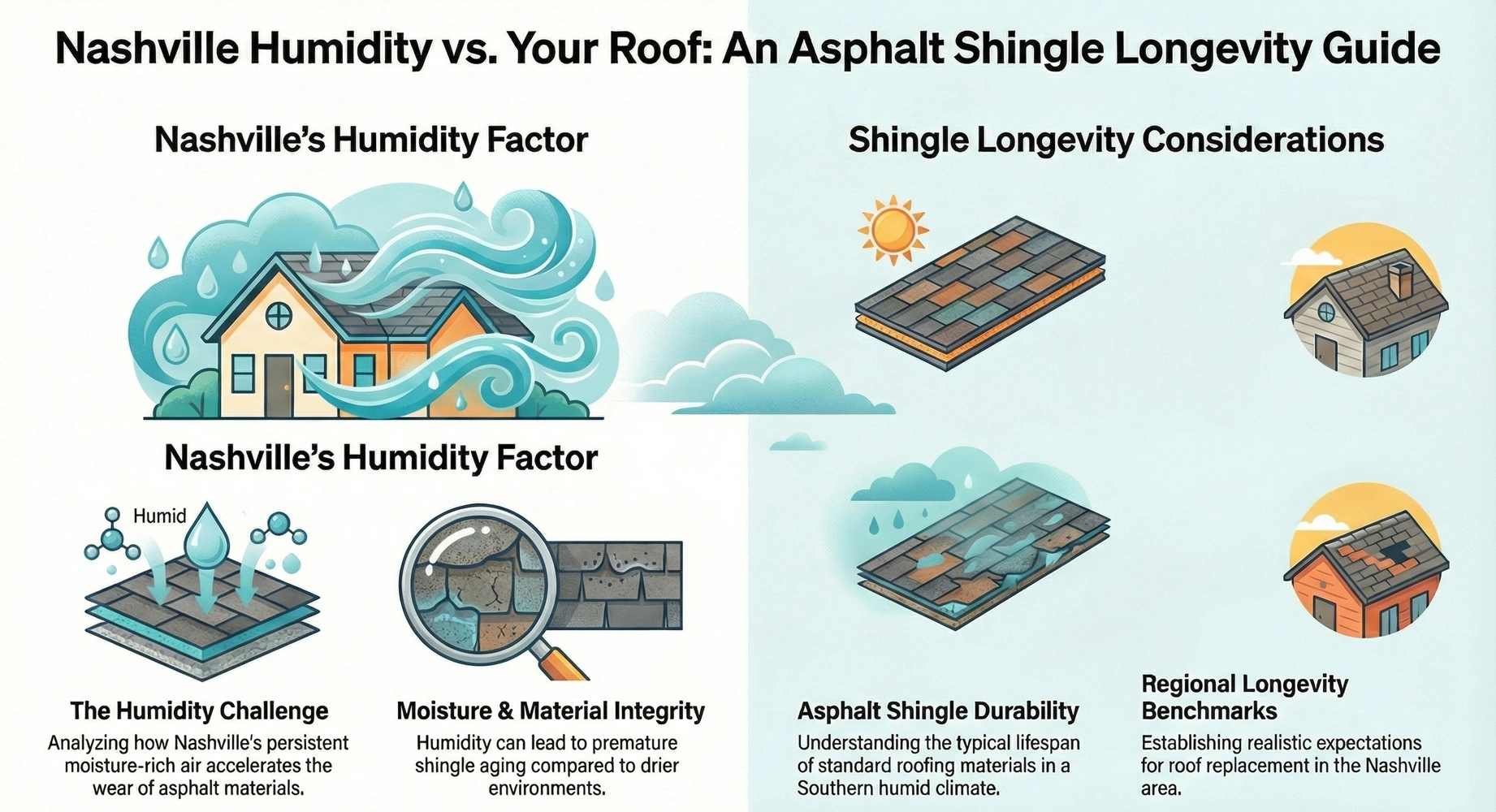
    How Long Should an Asphalt Shingles Roof Last in Nashville’s Humidity?

    Asphalt roofs in Nashville’s humid climate typically last 15-25 years, depending on shingle quality and maintenance, as high humidity accelerates mold, algae, and granule loss.

    Nashville’s hot, humid summers and stormy weather challenge asphalt shingle roofs, often shortening their lifespan compared to ideal conditions. While standard asphalt roofs nationwide average 20-30 years, local factors like expansion from heat, contraction in cooler months, and moisture-driven deterioration demand proactive care. Homeowners can maximize durability by choosing higher-quality shingles and staying vigilant.

    Asphalt Shingle Types and Lifespans

    Different asphalt shingles perform variably in Nashville’s humidity.

    Shingle TypeExpected Lifespan in NashvilleKey Traits Affected by Humidity
    3-Tab Asphalt15 years (max 20)Thin, single-layer; prone to rapid algae/mold.
    Architectural20-25 yearsThicker, multi-layer; better resistance but still vulnerable to granule loss.
    Luxury Asphalt30-50 yearsPremium fiberglass; highest humidity tolerance.

    Nashville’s high humidity promotes algae growth, weakening shingles over time, while heat causes cracking.

    Humidity’s Impact on Asphalt Shingle Roofs

    High humidity in Nashville fosters mold and algae, eroding shingle integrity faster than in drier areas. Combined with 90°F+ summers and UV exposure, this leads to drying, curling, and granule loss, potentially reducing lifespans by 20%. Storms add hail and wind damage, necessitating quick repairs.

    Maintenance Tips

    Regular upkeep extends roof life amid humidity challenges.

    Clean gutters twice yearly to prevent moisture buildup.

    Inspect annually for algae, moss, or cracks; treat with antimicrobial washes.

    Trim overhanging trees to reduce shade and debris that trap humidity.

    Ensure proper attic ventilation to minimize internal condensation.

    Quality installation by local pros also matters, as poor work amplifies climate stress.

    Read more:

    Commercial Roofing Contractor in Middle Tennessee | Drone Roof Inspection

    Summary

    In Nashville’s humidity, asphalt roofs last 15-25 years on average, with architectural shingles offering the best balance of cost and durability. Prioritize premium materials, annual inspections, and prompt repairs to push toward the upper end—potentially saving thousands on premature replacements. Consult a certified roofer for a personalized assessment.

  • Best Roofing Contractors for Storm Damage in Nashville, TN

    Best Roofing Contractors for Storm Damage in Nashville, TN

    Storms hit Middle Tennessee hard, leaving Nashville homeowners scrambling to repair roofs battered by wind, hail, debris, and heavy rain. Choosing the right contractor means fast response, insurance expertise, quality materials, and proven storm damage restoration skills. TCS Roofing stands out as a top choice, blending local knowledge with comprehensive services tailored to Nashville’s volatile weather.

    Why Nashville Needs Storm-Savvy Roofers

    Nashville’s position in “Dixie Alley” exposes it to frequent thunderstorms, hail events, and tornadoes—averaging over 50 severe storm days yearly. Recent January 2026 ice storms and 2025 hail outbreaks damaged thousands of roofs, spiking insurance claims. Top contractors excel in emergency tarping, full inspections, and navigating claims with carriers like State Farm or Allstate, common in the region. They use Class 4 impact-resistant shingles or metal roofing to withstand future hits, extending roof life in this high-risk zone.

    Homeowners risk mold, leaks, and structural issues without prompt action. The best pros arrive within 24-48 hours, document damage with photos/drones, and handle everything from shingle replacement to gutter/siding repairs.  

    TCS Roofing: Your Nashville Storm Damage Leader

    At TCS Roofing (tcsroofer.com), we specialize in storm damage restoration across Nashville, Murfreesboro, Franklin, Brentwood, and Middle TN. Founded by local experts with decades in the industry, our team has restored hundreds of roofs after events like the 2023 Clarksville tornadoes and 2025 hail storms. We guarantee satisfaction with written warranties, high-quality materials, and a seamless insurance process—maximizing your claim without out-of-pocket costs.

    Our process starts with free inspections using drones and thermal imaging to spot hidden wind uplift, hail bruises, or punctures invisible from ground level. We provide detailed reports with timestamps, matching NOAA weather data for airtight claims. Unlike fly-by-night operators, TCS Roofing is fully licensed, bonded, insured, and Owens Corning Preferred Contractor certified—ensuring code-compliant work that boosts home value.

    Top Competitors and What Sets TCS Roofer Apart

    Tim Leeper Roofing

    Founded in 2004 and headquartered in Nashville, Tim Leeper Roofing earned National Roofing Contractor of the Year in 2015. They handle residential/commercial repairs, gutters, siding, and insurance claims across Middle TN. Strengths include general contracting and chimney flashing expertise. However, TCS Roofing edges them with faster emergency response (under 24 hours) and specialized drone surveys for complex hail damage.

    ​Five Points Roofing

    This family-owned Franklin firm (since 2010) shines in architectural shingles, metal roofs, and insurance work for Nashville, Brentwood, and beyond. They emphasize customer relationships and roof washing. TCS matches their quality but adds full exterior restoration (gutters, vents, skylights) and a dedicated claims advocate—streamlining approvals in weeks, not months.

    MidSouth Construction

    Nashville-based since 2010, they certify in metal, slate, tile, and flat roofs, plus fire/water restoration. Ideal for commercial properties. TCS Roofing differentiates with residential focus, transparent pricing (no hidden fees), and post-storm tarping kits to prevent interim damage—critical in TN’s humid climate.

    Spotting Storm Damage: TCS Roofer Expertise in Action

    Post-storm, check for curled/missing shingles (wind), granule loss in gutters (hail), punctures from debris, or soft attic spots (water). TCS Roofing’s certified inspectors identify these plus subtle issues like compromised flashing or ice dam risks from winter events. We document everything for insurers, often securing full replacements covered 100%.

    In a typical hail claim, our team photographs bruises on shingles/AC units, measures stone size via weather reports, and recommends upgrades. For wind damage, we test seal integrity and reinforce ridges. Debris punctures get precise patching to match existing roofs, avoiding patchwork looks.

    Insurance Claims Made Easy with TCS

    Claims intimidate many, but TCS Roofing guides you: File promptly (within policy windows), provide our report, and let us meet adjusters onsite. We’ve boosted payouts by 30% on average through thorough documentation.  

    Why Choose TCS Roofing Over the Rest?

    Speed: 24/7 emergency service, same-week scheduling.

    Quality: Premium materials

    Value: Free estimates

    Act Now: Schedule with TCS Roofing Company

    Don’t let storm damage linger—contact TCS Roofing Company at tcsroofer.com or call (615) 997-4276 for your free inspection. As Nashville’s storm damage authority, we’re ready to protect your home through every squall. Storms pass, but quality roofs endure.

    Watch Now: Asphalt Shingle Roof Repair Services in Middle Tennessee

  • How Do You Determine Your Roof Pitch?

    How Do You Determine Your Roof Pitch?

    Roof pitch measures a roof’s steepness, crucial for material selection, construction, and maintenance. Learning to determine it empowers homeowners and DIYers to assess repairs or upgrades accurately.

    What Is Roof Pitch?

    Roof pitch describes the vertical rise of a roof over a horizontal run, typically expressed as a ratio like 6:12, meaning 6 inches of rise per 12 inches of run. This slant affects water runoff, snow shedding, and aesthetics—steeper pitches (over 9:12) suit snowy areas, while low pitches (under 4:12) work in dry climates. Expressed alternatively in degrees or percentages, pitch guides shingle types and truss design; for instance, US homes average 20°-30°.

    Why Measure Roof Pitch?

    Accurate pitch calculation ensures proper roofing materials, as low-slope roofs need underlayment to prevent leaks, unlike steep ones. It informs replacement costs—steeper roofs demand more labor—and complies with building codes varying by region. Homeowners use it for solar panel efficiency or insurance quotes, while builders balance pitch for style and practicality, targeting 4:12 to 6:12 as ideal.

    Tools You’ll Need

    Gather a 12-inch level, tape measure, ladder with safety gear, and optionally a framing square or smartphone app like “Pitch Gauge.” For attic access, add a notepad and flashlight. These basics suffice for most homes; pros might use laser levels for precision on large roofs.

    Method 1: From the Roof Surface

    Climb safely to the roof using a sturdy ladder and harness. Place the level horizontally on the roof, ensuring it’s plumb.

    ​Hold the level flat against the roofing material. Measure vertically from the roof to the level’s 12-inch mark—this distance is your rise. A 5-inch rise yields a 5:12 pitch. Note: Account for slippery surfaces or snow by measuring multiple spots and averaging.

    Pitch NotationRise (inches per 12″ run)Angle (degrees)Best Uses
    03:123~14°Low-slope, modern homes ​
    06:126~27°Standard residential ​
    09:129~37°Snow-prone areas ​
    12:1212~45°Steep, traditional styles ​

    Method 2: From the Attic

    Access the attic for a safer, ground-level option without roof climbing. Locate a rafter and measure from its bottom edge upward to the roof sheathing—this is total rise.

    ​Measure the rafter’s horizontal length (run), typically half the building’s width from ridge to wall. Divide rise by run for the pitch ratio; for example, 8 feet rise over 16 feet run equals 6:12 after converting to inches (812 / 1612). Verify with a framing square: Align the 12-inch body mark horizontally and read rise on the tongue.

    Advanced Calculation: Degrees and Percent

    For degrees, use rise/run as tangent: Roof angle = arctan(rise ÷ run) * (180/π). A 6:12 pitch (0.5 tangent) is about 27°—input into a calculator or app. Percentage pitch is (rise/run)*100; a 6:12 equals 50% slope. Online tools like Omni Calculator automate this, inputting rise and run for instant results.

    Using a Framing Square

    Mark pitch on a framing square for rafter cuts. For 6:12, note 6 inches on the tongue (vertical) and 12 on the body (horizontal). Slide the square along the rafter until lines meet evenly—this confirms pitch and aids precise cuts. Ideal for new builds or repairs.

    Apps and Digital Tools

    Smartphone apps simplify measurement: Level the phone on the roof for instant digital readouts, or use AR tools for remote estimates. RoofSnap’s calculator inputs dimensions for pitch, area, and material needs. Free options abound, but calibrate against manual methods for accuracy.

    Read more: Top ten Roofing Company in Franklin | Benefits of Drone Roof Inspection

    ​Common Mistakes to Avoid Roof Pitch Measurements

    Measure on a clear day to dodge ice or wet surfaces skewing levels. Ignore eaves or fascia—focus on the roof plane itself. Averages hide hips or valleys; measure each plane separately for complex roofs. Double-check math: Misdividing rise by run leads to costly material errors.

    Pitch and Regional Factors

    In Tennessee, US, with its humid subtropical climate featuring hot summers, occasional snow, storms, and heavy rain, pitches around 20°-30° (4:12 to 6:12) are standard for residential roofs to ensure good drainage and heat dissipation without excessive height. Steeper pitches (7:12+) suit eastern mountainous areas like the Smokies for snow shedding; moderate slopes work well in Nashville’s urban heat or Chattanooga’s valleys. Codes, based on IRC, mandate minimums like 2:12 for asphalt shingles (with double underlayment up to 4:12) to prevent leaks, prioritizing ventilation against extreme temps up to 100°F+.

    Determining roof pitch demystifies home upkeep. Whether eyeing shingles or repairs, these steps deliver pro-level insights safely. Practice on sheds first for confidence.

  • Emergency Roof Repair: What to Do When Storm Damage Hits Middle Tennessee

    Emergency Roof Repair: What to Do When Storm Damage Hits Middle Tennessee

    Middle Tennessee’s unpredictable weather, from severe thunderstorms and hail to high winds, often leaves roofs battered and homeowners scrambling. Acting fast after storm damage can prevent minor issues from becoming costly disasters. This guide outlines essential steps tailored to Middle Tennessee homes, where asphalt shingles dominate and local contractors like TCS Roofer in Nashville and Franklin respond 24/7.

    Stay Safe First

    Prioritize your safety above all after a storm hits areas like Nashville, Murfreesboro, or Clarksville. Avoid climbing onto a wet or unstable roof, especially with Middle Tennessee’s frequent ice storms or downed power lines from high winds. Inspect from the ground using binoculars for obvious issues like missing shingles or fallen branches, and stay indoors if lightning or flooding risks persist.

    Evacuate immediately if you spot sagging ceilings, bowing trusses, or major water pooling inside—these signal structural risks common in older ranch-style homes prevalent here. Middle Tennessee’s clay-heavy soils can exacerbate foundation shifts post-storm, making caution critical.

    Spot the Damage Signs

    Middle Tennessee storms pack hail up to golf-ball size and winds over 70 mph, shredding shingles and denting metal roofs on barns or modern builds. Look for curled or missing asphalt shingles (standard in 80% of local homes), cracked vents, granule loss in gutters, or exposed decking—hallmarks of hail impact.

    Indoors, check for water stains on ceilings, warped insulation, or mold growth in attics, which humid summers amplify. High winds often lift flashing around chimneys, a frequent fail point in brick-heavy Tennessee architecture. Document everything with timestamped photos from multiple angles for insurance claims, as local carriers like State Farm prioritize visual proof.

    Quick Temporary Fixes

    Don’t delay—cover exposed areas immediately to shield against follow-up rains common in Middle Tennessee’s stormy springs. Secure a heavy-duty tarp (at least 8-mil thick) over damaged sections using 2×4 boards, nails, or bungee cords; avoid tape alone, as it fails in wind.  

    Clear gutters and downspouts of debris to prevent backups, and place buckets under indoor leaks while moving furniture. For minor shingle gaps, apply roofing cement sparingly from a caulk gun, but skip this on steep pitches or if unsafe. These steps buy 24-48 hours until pros arrive, minimizing water intrusion that could rot local pine framing.

    Call Local Pros Immediately

    Contact licensed Middle Tennessee roofers offering 24/7 emergency service, such as TCS Roofer in Nashville who handle hail and wind damage routinely. Get free inspections; we use drones for safe assessments on multi-story homes in Hendersonville or Smyrna.

    Navigate Insurance Claims

    Middle Tennessee’s storm alley status means most policies cover wind/hail deductibles (often 1-2% of home value, around $2,000-$4,000 for a $300K house). File claims promptly: notify your agent within 24 hours, provide photos, and let roofers like TCS Roofer coordinate adjuster visits – we knew State Farm and Allstate quirks here.

    Request an Xactimate estimate (industry standard) and supplements for overlooked damage. Tennessee law mandates fair claims handling; if denied, appeal via the Department of Insurance. Full replacements often qualify if granule loss exceeds 30% or three-tab shingles fail integrity tests.

    Claim StepActionLocal Tip
    Notify InsurerCall agent with policy #Use TN FAIR Plan if underinsured
    Pro InspectionSchedule within 48 hrsDrones speed Nashville approvals
    Approval & RepairSign work orderCash-claim for deductibles common

    Understand Common Repairs

    Asphalt shingle patches fix wind-lifted areas, while hail demands full sections or overlays. Middle Tennessee’s freeze-thaw cycles worsen cracks, so pros seal with ice-and-water shields under new layers. Expect 1-3 days for emergencies, longer for totals.

    Costs range $5-$12 per sq ft for repairs, $400-$800/square for replacements; insurance covers most after deductible. Upgrades to impact-resistant shingles (Class 4) cut future premiums 20-30% via USAA or similar.

    Prevent Future Damage

    Trim overhanging oaks (common in Franklin yards) pre-storm, and install leaf guards on gutters. Annual inspections beat reactive fixes—Middle Tennessee’s National Weather Service issues hail watches; monitor via weather.gov for prep. Gutter helmets or ridge vents improve airflow, reducing ice dams in winter.

    Opt for 30–50-year architectural shingles rated for 130 mph winds, standard post-2011 tornadoes. Enroll in local alerts like Nashville’s N.O.A.H. for early warnings.

    Watch Now: Benefits of Drone Roof Inspection

    Why Middle Tennessee Faces High Risk

    The region’s rolling hills funnel storms from the Gulf, spawning supercells with baseball hail and 100 mph gusts—2024 saw 50+ severe events. Clay soils swell post-rain, stressing roofs on slab homes. Proactive maintenance saves thousands amid rising premiums (up 15% yearly).

  • Top 5 Roofing Company in Franklin TN – TCS Roofing Company

    Top 5 Roofing Company in Franklin TN – TCS Roofing Company

    If you’re a Franklin homeowner facing a roof project, you’re not alone. Franklin’s mix of historic homes and newer developments means roofs come in a variety of styles and ages, each with its own needs. The right roofing partner will not only install or repair a roof but also protect your home and maximize its value. Below are five reputable Franklin-based roofing companies known for craftsmanship, reliability, and strong local service. TCS Roofing Company is included to ensure you have a broad view of options.

    TCS Roofing Company: Local expertise you can trust

    What they do: TCS Roofing Company specializes in residential roof repairs, replacements, and maintenance, with an emphasis on durable materials and meticulous workmanship. Their services typically include thorough inspections, shingle or membrane roof installations, gutter work, and roof rejuvenation solutions.

    Why they stand out: TCS Roofing Company emphasizes transparent communication, timely project completion, and strong relationships with homeowners. They often tailor solutions to fit homeowners’ budgets while prioritizing long-term performance.

    Ideal for: Homeowners who want a trustworthy local team with personalized attention and clear pricing.

    Five Points Roofing: A family-owned Franklin staple

    Overview: Five Points Roofing began as a local, family-owned business serving Franklin and the broader Middle Tennessee region. They routinely handle roof replacements, shingle and metal installations, and insurance-related work.

    Strengths: Their local roots translate into responsive service and a hands-on approach to projects. They commonly partner with homeowners through insurance claims to ensure the process stays smooth from assessment to completion.

    Ideal for: Homeowners seeking a collaborative, family-driven company with a focus on relationship-building and long-term value.

    Bill Ragan Roofing: Industry reputation meets local service

    Overview: Bill Ragan Roofing has built a broad reputation across Middle Tennessee for professional roofing services, including replacements, storm damage repairs, and insurance claim guidance.

    Strengths: Strong warranty offerings, thorough inspections, and documentation to support insurance claims. Their experience with storm-related work can be particularly valuable after severe weather.

    Ideal for: Homeowners who want a well-known brand with extensive experience and robust support through the claims process.

    Bluebird Roofing: Modern approach with local emphasis

    Overview: Bluebird Roofing emphasizes quality craftsmanship, comprehensive inspections, and clear communication. They’re a solid option for Franklin residents seeking reliable workmanship with modern project management.

    Strengths: Transparent estimates, efficient scheduling, and a focus on durable, high-quality materials.

    Ideal for: Homeowners who value clarity in pricing and a streamlined, professional project experience.

    Universal Roofing & Construction: Broad capabilities in Franklin

    Overview: Universal Roofing & Construction serves Franklin with both residential and commercial capabilities. Their services often include roof repairs, replacements, and specialized system installations such as TPO for flat roofs.

    Strengths: They bring a broad scope of capabilities, which can be advantageous for homeowners who also need exterior or structural services beyond roofing.

    Ideal for: Homeowners who want a single contractor for multiple exterior projects or who anticipate non-roofing work in the future.

    What to look for when choosing a Franklin roofing company

    Local reputation and references: Seek recent customer reviews and ask for local projects similar to your home. A company with strong local ties tends to be more responsive and familiar with Nashville and Middle Tennessee weather patterns.

    Certifications and warranties: Confirm manufacturer certifications for the roofing systems they install and review labor warranties. This protects against defects and workmanship issues down the line.

    Insurance and licensing: Ensure the contractor holds proper licenses and workers’ compensation and liability insurance to protect against accidents and property damage.

    Written estimates: Obtain detailed, itemized estimates that cover materials, labor, permits, cleanup, and any contingencies. Compare apples-to-apples among multiple bids.

    Project timeline and communication: Discuss start and end dates, daily progress expectations, and how updates will be provided. Clear communication reduces surprises during projects.

    Understanding Franklin’s roofing landscape

    Climate considerations: Franklin experiences hot summers, cold winters, and severe storms at times, so choose roofs and materials that offer durability and energy efficiency. A well-insulated attic and vents help regulate temperature and reduce energy costs.

    Architectural compatibility: Franklin’s diverse housing stock—historic homes with intricate details to modern subdivisions—requires contractors who can match or complement existing architectural aesthetics, including color and shingle profiles.

    Insurance and permitting: Roof replacements often involve insurance claims or permit applications. A contractor with experience navigating these processes can save time and reduce friction.

    Questions to ask during consultations

    What materials do you recommend for my roof style and budget, and why? How do these choices affect durability and energy efficiency?

    Do you handle insurance claims end-to-end, and can you provide a detailed timeline and checklist?

    What is included in the warranty, and how are warranty claims handled?

    Can you show photos or references from similar Franklin projects, including the surrounding neighborhood style?

    How will you protect landscaping, gutters, and siding during the project, and what is your cleanup plan?

    Common roofing materials and their fit in Franklin

    Architectural asphalt shingles: A popular balance of cost, durability, and curb appeal. They work well with many Franklin homes and are straightforward to install.

    Metal roofing: Excellent durability and a modern aesthetic that can suit newer Franklin homes or add a distinctive look to certain architectural styles.

    Tile or slate: For older or more ornate homes, these materials offer classic appeal but require specialized installation and maintenance.

    Flat roofs (TPO/Built-Up): For commercial or some modern residential applications, flat or low-slope roofs with energy-efficient membranes may be suitable.

    Read more:

    Asphalt Shingle Roof Replacement in Tennessee | What To Do After Hail Damages Your Roof

    Maintenance and care tips to extend roof life

    Regular inspections: Schedule inspections after major storms or seasonal transitions to catch damage early and prevent costly repairs.

    Gutter maintenance: Keep gutters clear of debris to prevent water damage around eaves and foundation.

    Attic health: Ensure proper insulation and ventilation to prevent ice damming in winter and reduce attic moisture buildup.

    Timely repairs: Address damaged shingles, flashing, or seals promptly to prevent leaks and further degradation.

    What customers should know about pricing

    Pricing varies by material, roof size, pitch, attic space, and accessibility. Expect bids to differ based on materials and labor costs.

    A transparent bid should include costs for materials, labor, permits, disposal, and cleanup, with a clear warranty outline.

    Avoid price-only decisions; prioritize long-term value, warranty coverage, and contractor reliability.

    Conclusion

    Choosing a Franklin roofing company requires balancing price with reliability, craftsmanship, and customer service. A strong local presence, clear communication, and transparent pricing are indicators of a contractor who can deliver a durable, aesthetically pleasing roof that protects your home for years to come. The options above each bring distinct strengths, so compare bids, review projects similar to your home, and select a partner who aligns best with priorities such as budget, timelines, and design preferences.

  • The Complete Roof Replacement Checklist: Costs, Timeline & Tips

    The Complete Roof Replacement Checklist: Costs, Timeline & Tips

    Replacing your roof is one of the biggest home investments you’ll make. A worn-out roof doesn’t just look bad—it can lead to leaks, structural damage, and skyrocketing energy bills. But with the right checklist, you can navigate the process smoothly, save money, and ensure lasting results. This guide for Complete Roof Replacement Checklist breaks down everything from costs and timelines to pro tips, helping you make informed decisions.

    Whether your roof is 20+ years old, damaged by storms, or simply inefficient, a full replacement beats patching. Asphalt shingles dominate U.S. homes (about 75% market shares). Let’s dive into the checklist.

    Step 1: Assess Your Roof’s Condition

    Start here to confirm replacement is necessary.

    Inspect visually: Climb a ladder (safely!) or hire a pro for signs like missing granules, curling shingles, daylight through cracks, or interior stains/ceiling spots.

    Check age and material: Asphalt lasts 20-30 years; metal 40-70; tile 50+. Use manufacturer warranties as a guide.

    Test for issues: Probe soft spots, measure attic insulation, and scan for mold or pests.

    Tip: Document damage with photos for insurance claims. If under 15 years old, repairs might suffice—saving 30-50% over replacement.

    Hire a certified inspector ($300-600) to avoid surprises. Expect this phase to take 1-2 days.

    Step 2: Research and Budget for Costs

    Roof replacement costs vary widely by size, location, materials, and labor. National averages in 2025 hover at $8,000-$25,000 for a 1,500-2,000 sq ft home, or $5-$20 per sq ft installed.

    Cost Breakdown Table

    MaterialCost per Sq Ft (Materials + Labor)DurabilityBest For
    Asphalt Shingles$5-$1220-30 yrsBudget homes, most climates
    Metal$10-$2040-70 yrsDurability, hail-prone areas
    Wood Shakes$12-$1820-40 yrsAesthetic appeal, mild weather
    Tile/Clay$15-$2550+ yrsSouthwest styles, fire resistance
    Synthetic/Slate$18-$3050+ yrsLuxury, low maintenance

    Additional Expenses:

    Tear-off/disposal: $1-$2 per sq ft

    Underlayment/flashing: $500-$2,000

    Permits/inspections: $200-$1,000

    Gutters/ventilation upgrades: $1,000-$5,000

    Factors inflating costs: Steep pitches (+20%), multi-story homes (+15%), urban areas (labor shortages), or eco-upgrades like cool roofs (energy rebates up to $1,500 via Inflation Reduction Act).

    Budget Tip: Get 3-5 quotes. Aim for 10-15% contingency. Financing options like home equity loans or manufacturer rebates can ease the hit.

    Step 3: Choose Materials and Features

    Match to your climate, style, and budget.

    Prioritize energy efficiency: Reflective “cool roofs” cut cooling bills by 10-15%.

    Go green: Solar shingles (e.g., Tesla Solar Roof) integrate panels, qualifying for 30% federal tax credits.

    Warranty check: Lifetime prorated for premium brands like GAF or CertainTeed.

    Pro Tip: Avoid cheapest bids—lowballers skimp on nails or underlayment, leading to early failures. Look for Energy Star-rated products.

    Step 4: Select and Vet Contractors

    Your roofer makes or breaks the job.

    Credentials: Licensed, insured (liability + workers’ comp), Owens Corning or GAF certified.

    Reviews: Check BBB, Angi (formerly Angie’s List), and recent Google reviews (4.5+ stars).

    References: Visit 2-3 past jobs; ask about communication and cleanup.

    Sign a detailed contract covering scope, timeline, payment schedule (e.g., 30% deposit, 60% mid-job, 10% final), and warranties. Expect contractor selection to take 1 week.

    Step 5: Timeline and Project Phases

    A standard 2,000 sq ft roof takes 3-5 days in good weather, but plan for 1-2 weeks total with prep/delays.

    Typical Timeline

    Prep (1-2 days): Permits, dumpster delivery, tarps for protection.

    Tear-off (1 day): Remove old layers (most codes limit to two).

    Inspection/Repair (half day): Fix decking, add ice-water shield.

    Installation (1-3 days): New underlayment, shingles/flashing, ridge vents.

    Cleanup/Final (1 day): Magnetic sweep, final walk-through.

    Weather Delays: Rain or wind pushes back 2-7 days. Schedule in spring/fall for best conditions.

    Watch Now: Roofing Services Provider in Tennessee US

    Step 6: During and Post-Installation Tips

    Minimize disruptions.

    Prep your home: Move cars/patio items, trim overhanging branches.

    Monitor daily: Ensure daily cleanup; voice concerns immediately.

    Post-job checks: Test for leaks after first rain, verify flashing around chimneys/vents.

    Maintenance for Longevity: Annual inspections, clean gutters twice yearly, trim trees. This extends life by 5-10 years.

    Common Pitfalls to Avoid

    Skipping ventilation: Causes ice dams/attic heat (add $500 ridge vents).

    Ignoring local codes: Fines up to $1,000.

    Rushing in storm season: Inflated “emergency” prices.

    Final Thoughts: Invest Wisely for Peace of Mind

    A quality roof replacement boosts curb appeal (ROI ~60-70% per Remodeling Magazine), enhances insulation, and prevents $10,000+ in water damage. By following this checklist, you’ll control costs, and enjoy 20-50 years of protection.

    Ready to start? Get quotes now with TCS Roofing Company, leading roofing contractors in Middle Tennessee, USA