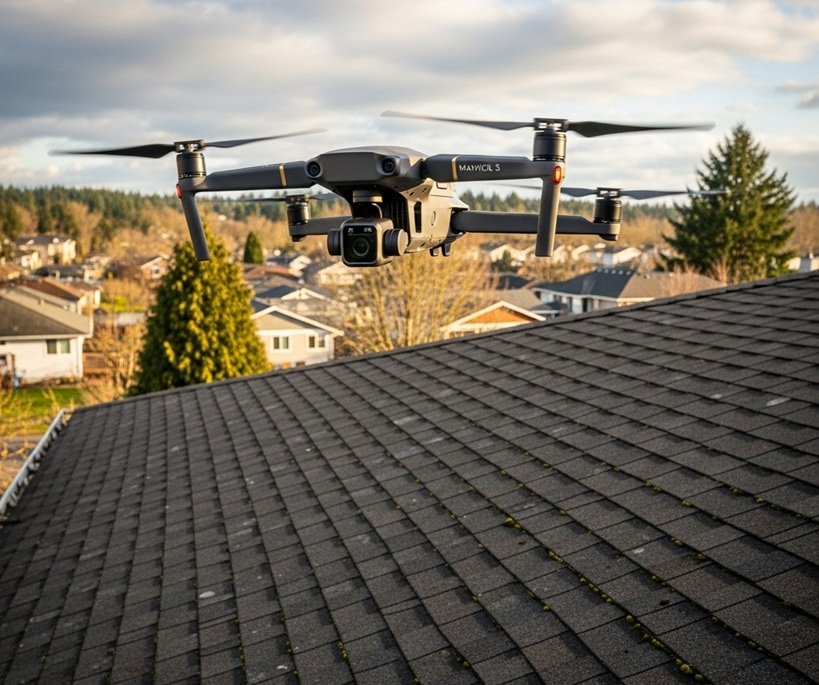
Drones have revolutionized roof insurance inspections by making the process safer, faster, more accurate, and cost-effective for insurers, property owners, and contractors alike. The adoption of drones for roof inspections is rapidly growing. This technological shift offers a multitude of benefits, from improved safety to enhanced data quality, making drones an essential tool for insurers and property managers.
Drones Roof Inspections Enhanced Safety
One of the primary advantages of drone-based inspections is enhanced safety. Drones eliminate the need for inspectors to physically climb onto roofs, which can be slippery, steep, or damaged. This reduces the risk of falls, injuries, and other accidents, protecting not only the inspectors but also the property owners from potential liabilities associated with traditional roof inspections. For commercial buildings with complex or high roofs, the safety improvements are even more significant.
Comprehensive Coverage of Roof Structures
Traditional roof inspection methods often miss out on hard-to-reach areas such as roof edges, corners, and steep slopes. Drones, equipped with high-resolution cameras and advanced sensors, can access these typically inaccessible spots with ease, ensuring a comprehensive view of the entire roof. As a result, every nook and cranny can be inspected thoroughly, reducing the chances of undetected damage.
Superior Accuracy and High-Quality Data
Drones capture high-resolution images and videos, delivering superior accuracy in detecting roof problems. With the capability to zoom in on minor defects—such as cracks, missing tiles, or subtle water damage—drones provide more reliable inspection results than the naked eye can achieve. Advanced models use sensors and thermal imaging to identify issues invisible to traditional inspections, such as heat leaks, trapped moisture, or insulation gaps.
Time Efficiency and Rapid Assessments
Drone roof inspections are remarkably efficient, completing the entire process in minutes compared to hours or days required by manual inspections. Insurers can process up to 1.5 times more claims per day using drone technology, allowing for rapid response to storm damages or routine assessments. This time-saving capability benefits property owners, insurers, and contractors by reducing downtime and expediting repair planning.
Cost-Effective Operations
Cost-effectiveness is another compelling benefit of drone roof inspections. Drones reduce costs. The detailed data they gather helps prevent missed issues, averting unexpected expenses from hidden damage. Additionally, lower operational costs translate to reduced loss adjustment expenses for insurers—a critical metric in the industry.
Eco-Friendly Approach
Drones present an eco-friendly alternative to traditional inspection methods. Manual inspections typically involve vehicles, heavy equipment, and materials that contribute to a high carbon footprint. In contrast, drones are battery-powered and require minimal resources to operate, helping decrease fuel consumption, waste, and emissions.
Early Detection of Hidden Problems
Modern drones equipped with tools like infrared and thermal imaging can detect problems such as heat loss or water leaks that elude standard visual inspections. Detecting these issues early helps property owners address them before they escalate into major repairs or claims, thereby extending the roof’s lifespan and saving money long-term.
Fraud Reduction and Improved Accountability
Drones make insurance claim verification more objective by capturing time-stamped, geolocated visual records of roof conditions before and after events. This digital evidence helps reduce fraud and human error, as insurers can compare imagery to substantiate claims and ensure damage is accurately documented. Automation and integration with property risk platforms also result in standardized, reliable inspections.
Seamless Data Integration and Automation
Drone inspections now involve advanced software capable of generating detailed 3D models and comprehensive datasets. Artificial intelligence can analyze thousands of drone images in minutes, flagging areas of concern and automating measurements and repair estimates. Insurers can connect drone data directly to claim evaluation platforms, streamlining operations and ensuring precise, actionable information for adjusters.
Increased Accessibility for All Roof Types
Roofs that are steep, tall, or obstructed by landscaping have always posed serious challenges for manual inspections. Drones overcome these issues by quickly and flexibly surveying even the largest commercial or multi-story residential properties. For property managers and owners, this increased accessibility means fewer barriers and a proactive approach to roof maintenance and insurance claims.
Building a Comprehensive Audit Trail
Drone roof inspections result in a robust and tamper-proof audit trail, making disputes between insurers and claimants easier to resolve. Every inspection generates a digital record, supporting transparency, accountability, and regulatory compliance. For insurers, this means lower liability and improved customer trust.
Case Examples: Residential and Commercial Success
From homeowners verifying storm damage to roofing contractors planning targeted repairs, drone inspections offer critical support for insurance processes. Large commercial buildings such as warehouses and shopping centers benefit from aerial views without disrupting operations, illustrating the wide-ranging adoption and effectiveness of this modern approach.
Read more: Commercial Roofing Company in TN US | 5 Best Roofing Companies in Gallatin TN
Conclusion: Drones—The Future of Roof Insurance Inspections
With proven benefits in safety, speed, accuracy, cost, and reliability, drones are transforming the way roof insurance inspections are conducted. Their ability to quickly deliver comprehensive, high-quality data not only makes the job easier for insurers and contractors but also provides peace of mind for property owners and managers. By addressing common concerns like access and risk, drone inspections represent the best-in-class solution poised to shape the future of insurance assessments for years to come.