Imagine this: You’re enjoying a quiet evening at home when you hear a faint drip-drip-drip from the ceiling. Water stains spread like ink on paper, and suddenly, your living room is a soggy mess. Roof leaks don’t announce themselves with fanfare—they sneak up, turning minor issues into costly disasters. In fact, according to the Insurance Information Institute, water damage from roof leaks causes billions in claims annually in the U.S. alone, and similar trends hold in regions like India where monsoons exacerbate the problem.
The good news? Most leaks stem from preventable roof damage, and spotting signs early can save you thousands in repairs. Whether you have asphalt shingles, tiles, or a metal roof, vigilance is key. In this post, we’ll break down the top warning signs, from visible clues to subtle indoor hints, so you can act before your ceiling caves in. Let’s dive in and arm you with the knowledge to protect your home.
Understanding Common Roof Vulnerabilities
Roofs endure relentless abuse from weather, UV rays, debris, and time. Asphalt shingles, popular in many homes, last 20-30 years but crack under extreme heat or hail.
Key culprits include:
Aging materials: Shingles curl, crack, or lose granules after 15-20 years.
Weather events: Heavy rain, wind, or hail loosens flashing and underlayment.
Tree proximity: Overhanging branches scrape surfaces and drop debris that traps moisture.
Poor installation or maintenance: Gaps around vents or chimneys invite water.
Regular inspections—twice yearly and after storms—reveal issues before they escalate. Climb a ladder (safely!) or hire a pro for a bird’s-eye view.
Visible Exterior Signs of Trouble
Start outside; the roof’s surface tells the real story. Walk your property and scan with binoculars if needed.
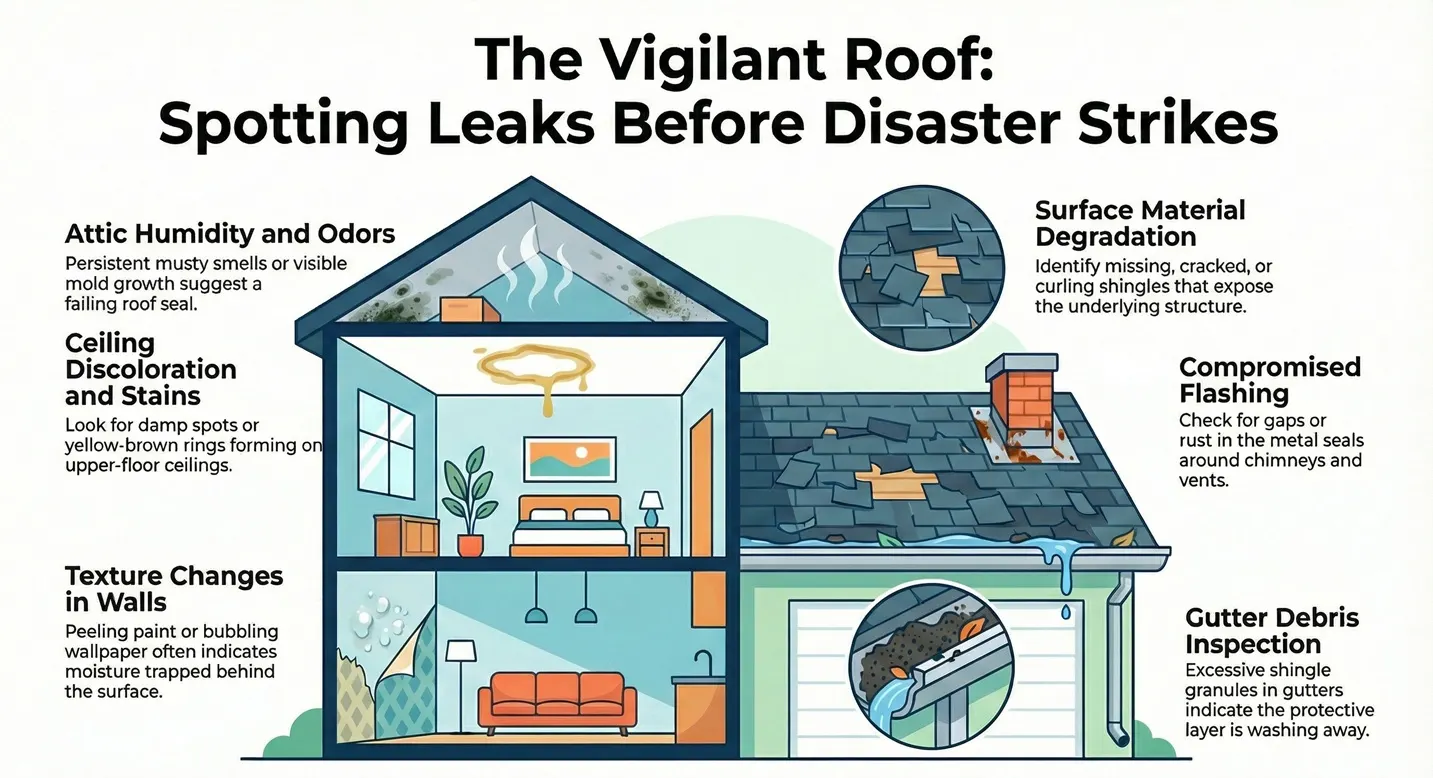
Missing or damaged shingles/tiles: Look for gaps where wind has ripped pieces away. Missing shingles expose underlayment to rain, leading to rot. Example: After a gusty storm, check eaves and ridges—loose pieces flap like warning flags.
Granule loss on asphalt shingles: Rub your hand over shingles; black streaks in gutters signal erosion. Granules protect against UV; their loss shortens lifespan by years.
Cracked or buckling materials: Tiles split from freeze-thaw cycles or heat. Buckled shingles curl upward, creating pools of water.
Sagging roofline: A dip indicates weakened rafters or trusses, often from prolonged leaks or rot. Don’t ignore this—it’s structural.
Damaged flashing: Metal seals around chimneys, vents, and skylights. Rust, dents, or gaps here are leak magnets.
Pro tip: Photograph your roof post-monsoon. Compare seasonally to track changes.
Subtle Clues from Your Attic and Interior
Roof issues often hide until they hit indoors. Inspect your attic with a flashlight—wear a mask for insulation dust.
Water stains on rafters or sheathing: Brown, yellow, or black spots mean past leaks. Even dry stains signal ongoing vulnerability.
Mold or mildew growth: Musty odors and fuzzy patches thrive in damp wood. In humid climates like Nashville, this spreads fast, risking health issues like respiratory problems.
Daylight through cracks: Poke a wire through gaps; if light shines from outside, water will follow.
Indoors, watch for:
Ceiling stains: Rust-colored rings near lights or fans indicate roof penetration.
Peeling paint or warped drywall: Moisture lifts finishes before visible puddles form.
Bubbling or discoloration: Paint bubbles as water seeps from above.
Catch these early, and a simple patch suffices. Delay, and you’re looking at ceiling replacement.
Hidden Dangers: Ice Dams, Poor Ventilation, and Pests
Not all damage is obvious. Ice dams in colder climates (or rare winter snaps in India) form when snow melts and refreezes, forcing water under shingles. Poor attic ventilation traps heat and moisture, accelerating shingle breakdown.
Pests play a sneaky role too:
Animal intrusions: Squirrels or birds peck holes; raccoon damage mimics hail.
Insect infestations: Carpenter ants tunnel into soft, wet wood, worsening rot.
Test ventilation by feeling for hot spots in the attic during summer. Fans or ridge vents help, but clogged ones fail silently.
Step-by-Step Inspection Checklist
Turn knowledge into action with this quick guide:
Safety first: Use stable ladders, work with a buddy, and avoid steep pitches. Hire pros for steep or multi-story roofs.
Exterior scan (20 minutes): Check shingles, flashing, gutters (clogged = overflow damage), and chimney seals.
Attic dive (10 minutes): Look for stains, mold, and soft spots. Press wood gently—squishy means rot.
Interior patrol: Scan ceilings, walls, and around fixtures for anomalies.
Post-inspection: Clear debris, trim trees, and clean gutters. Schedule pro cleaning annually.
Tools needed: Binoculars, flashlight, ladder, gloves, camera.
If you spot issues, tarp temporarily and call a certified roofer – TCS Roofing Company for repairs.
Read more:
Roof Repair Experts in Middle Tennessee | Commercial Roofing Contractor in Middle Tennessee
When to Call the Pros and Prevention Tips
DIY works for minor fixes like sealant on cracks, but red flags—sagging, large holes, electrical fizzing—demand experts.
Prevent with:
Annual pro inspections.
Gutter guards and leaf blowers.
Quality underlayment during reroofs.
Weatherproofing flashing with silicone caulk.
Summary
Spotting roof damage early hinges on vigilance: Watch for missing shingles, granule loss, stains, mold, and sags. Regular checks—exterior, attic, interior—thwart leaks before they ruin ceilings. Armed with this checklist, you can safeguard your home from water woes. Act now; a dry roof today means peace of mind tomorrow. Share your inspection stories below—what signs have you caught?
Leave a Reply